
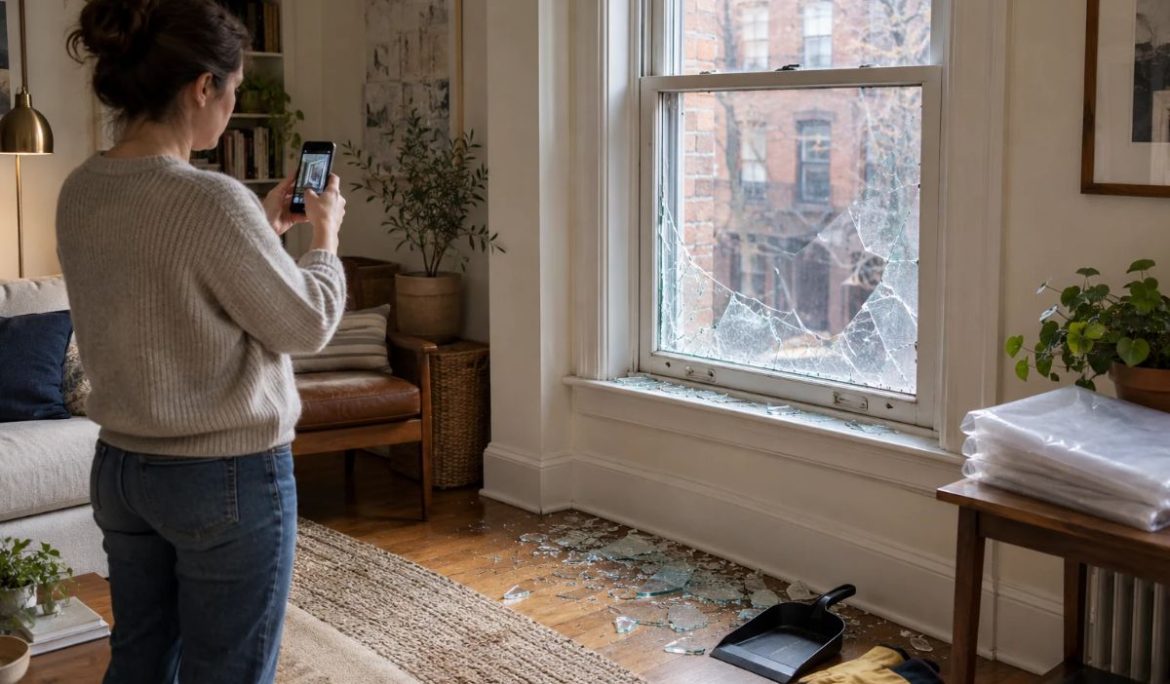
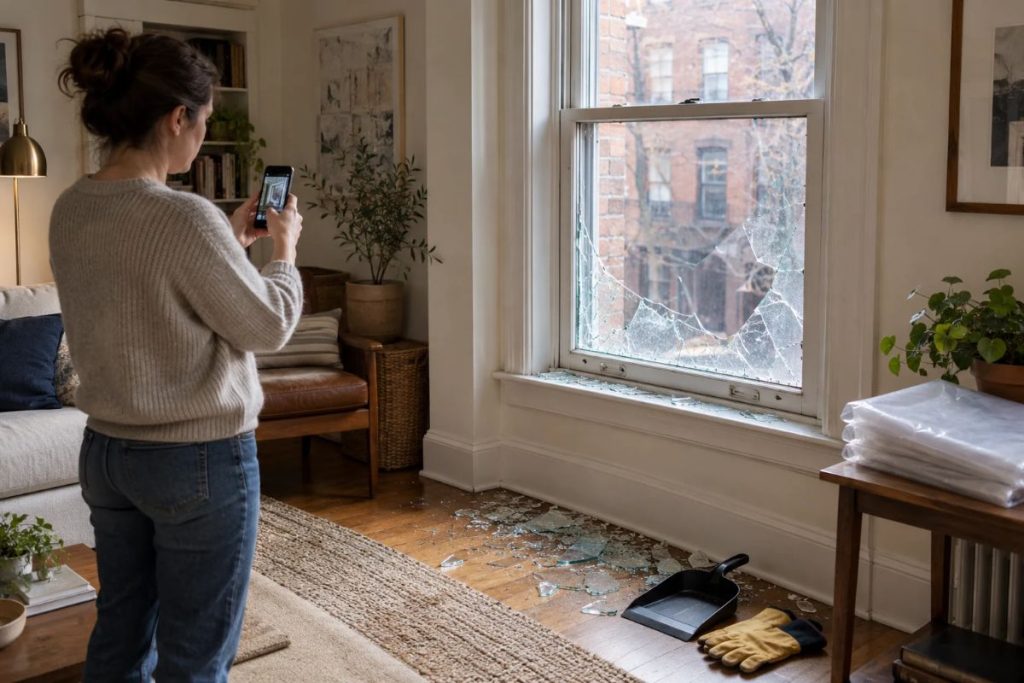
Most people never learn what to do when a window breaks until it happens to them. What if one moment it is a normal evening, and the next you hear a loud crack and find broken glass across the floor? That is why knowing what to do in that situation can help you respond quickly and safely. This guide covers the steps to take in the right order, the mistakes to avoid, and the questions New Yorkers ask most. Keep reading for the full guide.
What to Do When a Window Breaks, Step by Step
A window can break in a second, and the moment it happens, most people are not sure where to begin. The first few minutes matter more than they seem, because a few quick choices can decide whether anyone gets hurt and how much damage follows. Knowing what to do first, and what to do next, makes those minutes much easier to handle. That is why the steps below are in the order you should follow them:
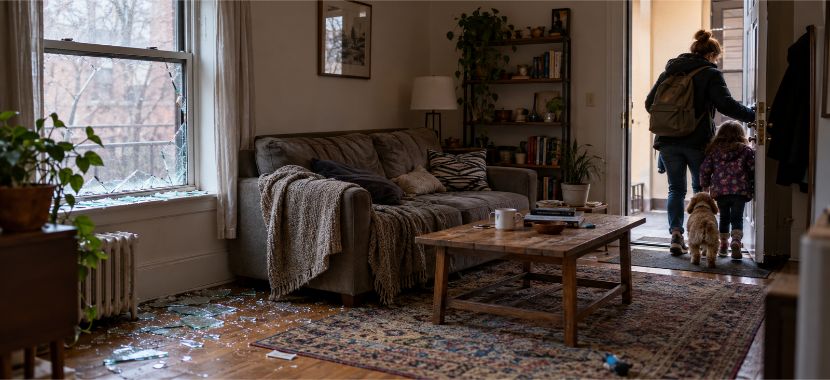
Step 1: Keep People and Pets Away From the Glass
You can start by moving everyone out of the room, including children and pets. Broken glass scatters farther than it looks, and tiny pieces can sit on the floor where nobody will see them. Carry small pets out instead of letting them walk across the floor. Close the door if the room has one, or block the doorway with a chair. Once everyone is out of reach, you can look into what caused the break.
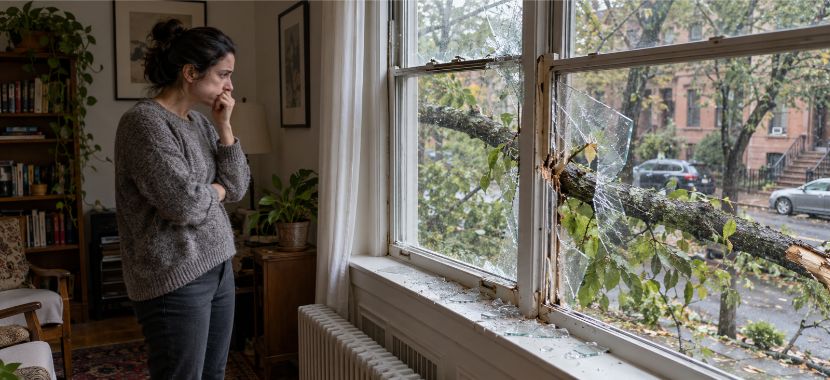
Step 2: Find Out What Broke the Window
A ball, a rock, or a fallen branch near the window is often the cause, since a break from outside usually leaves something behind on the floor. Next, check for signs that someone tried to get in, such as a forced lock or muddy marks. If you think someone may have entered, leave the home and call 911 from a safe place. If it was an accident or a storm, you can stay and carry on with the next steps. Either way, leave everything where it is for now.
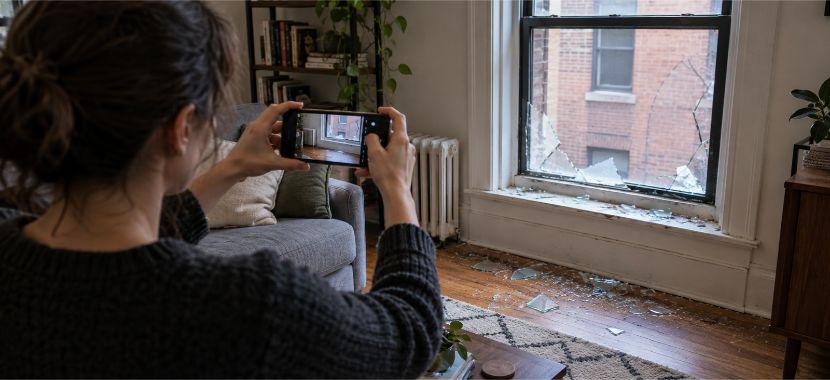
Step 3: Take Photos Before You Clean Up
Use your phone to photograph the window before anything is moved because Photos taken now show the damage exactly as it was, which is hard to show once the glass is gone. Start with one wide shot of the whole room, then take close-ups of the broken pane, the frame, and the glass on the floor. If something caused the break, such as a ball or a branch, photograph it where it landed.
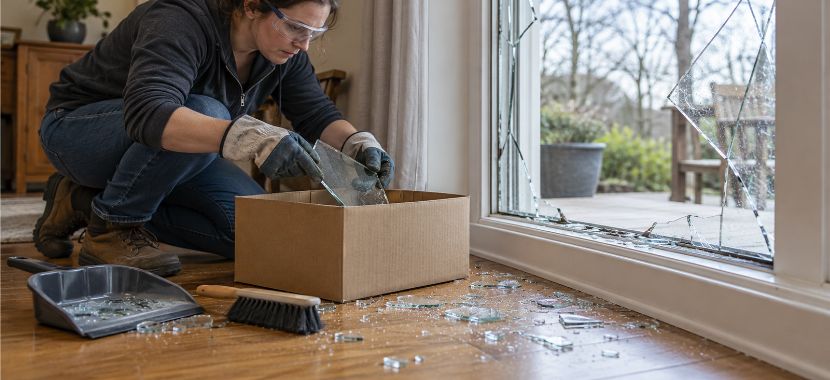
Step 4: Wear Protection and Clear the Loose Glass
Put on thick gloves and sturdy shoes before you touch anything. Add safety glasses if you have them. Pick up the loose pieces first, starting with the larger ones, and place them in a heavy cardboard box. Leave any glass that is still stuck in the frame for now. Then sweep the floor slowly toward the center of the room, so small pieces do not scatter. For the tiny shards left behind, press a damp paper towel over the spot. The room is now safe, but the glass may not have stayed inside.
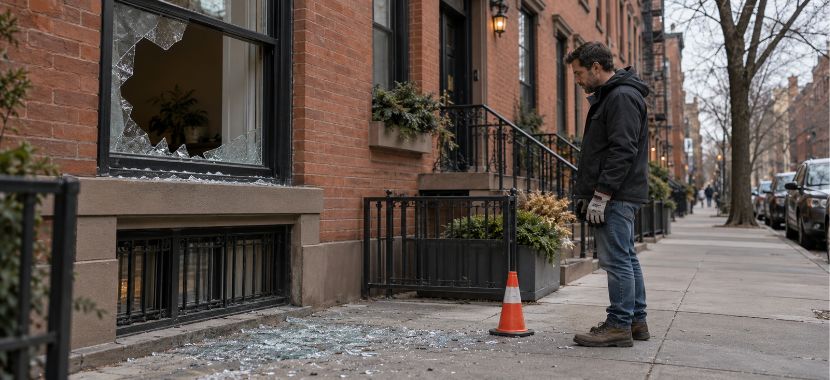
Step 5: Check the Area Outside the Window
Look at the balcony, the patio, the yard, or the sidewalk below for pieces that fell. Glass that lands on a shared walkway or a public sidewalk can hurt people passing by. Clear what you can reach safely with your gloves on. If some pieces are out of reach, place a chair or a sign near the spot to warn others. Never lean out of a window to get to them. Once the outside is safe, the opening itself needs attention.
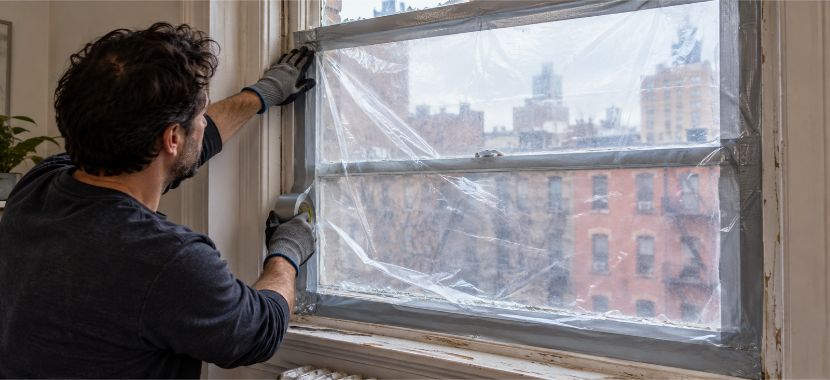
Step 6: Cover the Opening With a Temporary Fix
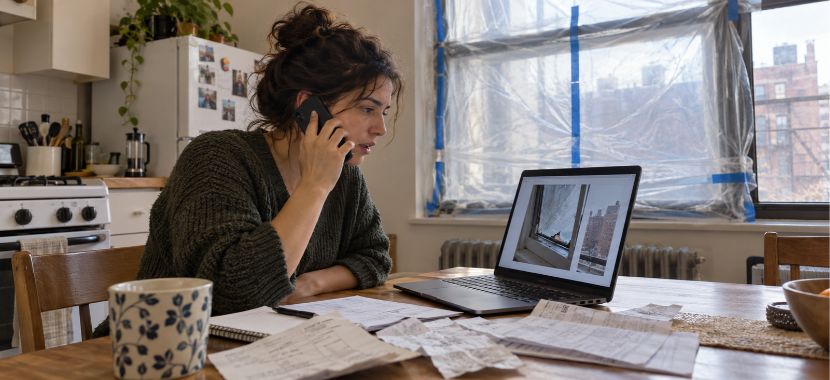
Use heavy plastic sheeting or thick cardboard to close the opening. Working from inside the room, cut it a few inches larger than the gap, then tape every edge firmly with duct tape to the frame or the wall around it. Tape it over any glass still left in the frame, so nobody brushes against it. This keeps out rain, cold air, and animals until the window is repaired. It is only a short-term cover, so do not expect it to last for weeks.
Step 7: Report the Damage to Your Landlord or Insurer
This last step only takes a few minutes, but it protects you later. If you rent, tell your landlord or building management, and put it in writing by text or email. Send the photos you took along with the date the window broke. If you own the home, call your insurance company to ask whether the damage is covered. Keep the receipts for any tape or sheeting you bought, since some policies repay those costs. If the police came, keep the report number, because insurers often ask for it. Once that is done, the urgent part is over.
Common Mistakes to Avoid When a Window Breaks
Even when you know the right steps, a few small mistakes can make a broken window more dangerous or cause further damage. They are the kind that lead to cuts, more damage, or a bigger repair bill.
- Don’t Assume a Small Crack Can Wait: Wind or a sudden change in temperature can make the crack spread fast. So, always have the window checked before the damage becomes larger.
- Don’t Force a Broken Window Open or Shut: You could knock loose glass out or make the crack worse.
- Don’t Use a Vacuum on Large Pieces of Glass: Big pieces can rip the bag or hose and ruin the vacuum.
- Don’t Throw Loose Glass Straight Into the Trash: Put it in a sealed box marked “glass” so nobody gets cut taking out the bag.
- Don’t Forget to Check Rugs and Curtains for Shards: Tiny pieces get stuck in the fabric and cut bare feet or paws later.
Wrapping Up
Knowing what to do when a window breaks, and what to avoid, makes the whole situation easier to handle. Once the window is covered, the next move is a proper repair, and that is where Aron Windows & Doors comes in. We repair broken windows, replace damaged glass, and handle emergency repairs in New York. Our team is licensed, insured, and has over 20 years of experience with New York windows, so we have seen many kinds of breaks.
So, if you want us to look at your window, call us at (212) 381-6006. We will check the damage and tell you what it needs, with no pressure.












1 Comment
Vinyl Window Replacement Cost: What You Will Really Pay
[…] in some cases. Insurance usually pays for sudden damage, like a storm or break-in, but not for old or worn windows. We can give you a written estimate for […]